International Schools in Japan
Your independent guide to international schools in Tokyo
Clarity for Confident Choices
We are an independent, information-based resource designed to help families explore and understand international schools in Japan, with a primary focus on international schools in Tokyo and the surrounding metropolitan area. Our goal is to make the search for the right international education clear, transparent, and easier to navigate.
Rather than ranking or scoring schools, we present accurate, factual details about each option — including curricula (such as IB and other international programs), teaching approaches, language of instruction, age ranges, locations, and school structure. This allows families to make informed comparisons based on what matters most to them.
Our aim is to give parents the context and clarity they need when considering international education in Japan. By providing reliable information in one place, we help families thoughtfully evaluate international school options and identify the environment that best fits their child, their values, and their circumstances.
International Schools in Japan — At a Glance
We believe every learner’s journey is unique. The right educational path isn’t always obvious which is why providing clarity and context matters.
International Schools Japan
Curriculums
International Schools in Tokyo has a surprisingly wide mix of international school curricula, but most schools fall into these categories.

International Baccalaureate (IB)
A globally recognized, inquiry-based curriculum focused on critical thinking, academic depth, and international mindedness.
American Curriculum
A flexible, standards-based system emphasizing breadth of subjects, continuous assessment, and preparation for U.S. universities.

British Curriculum
A structured academic pathway centered on the National Curriculum, IGCSEs, and A Levels, with a strong subject-focus.
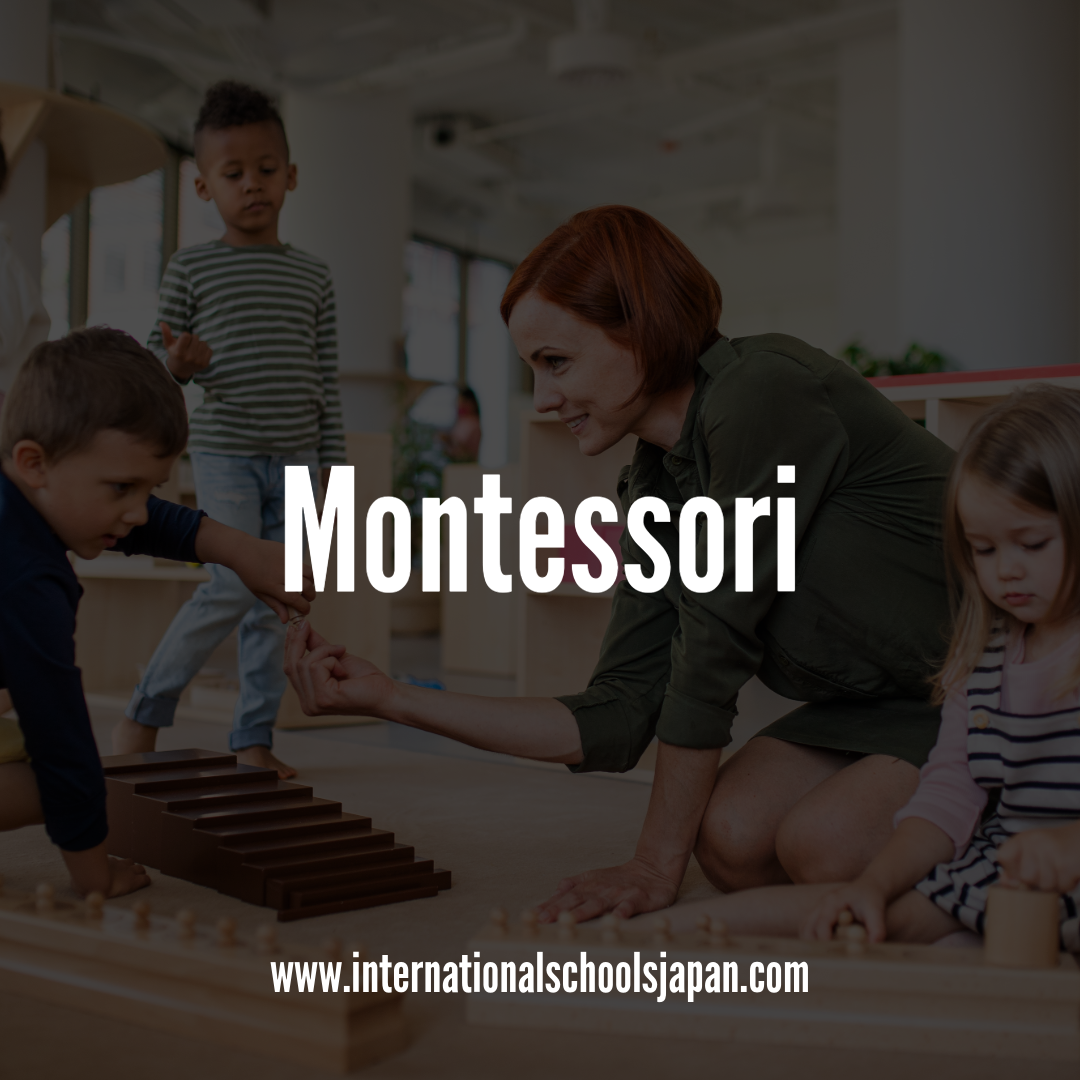
Montessori
A child-led approach that emphasizes independence, hands-on learning, and development at an individual pace.
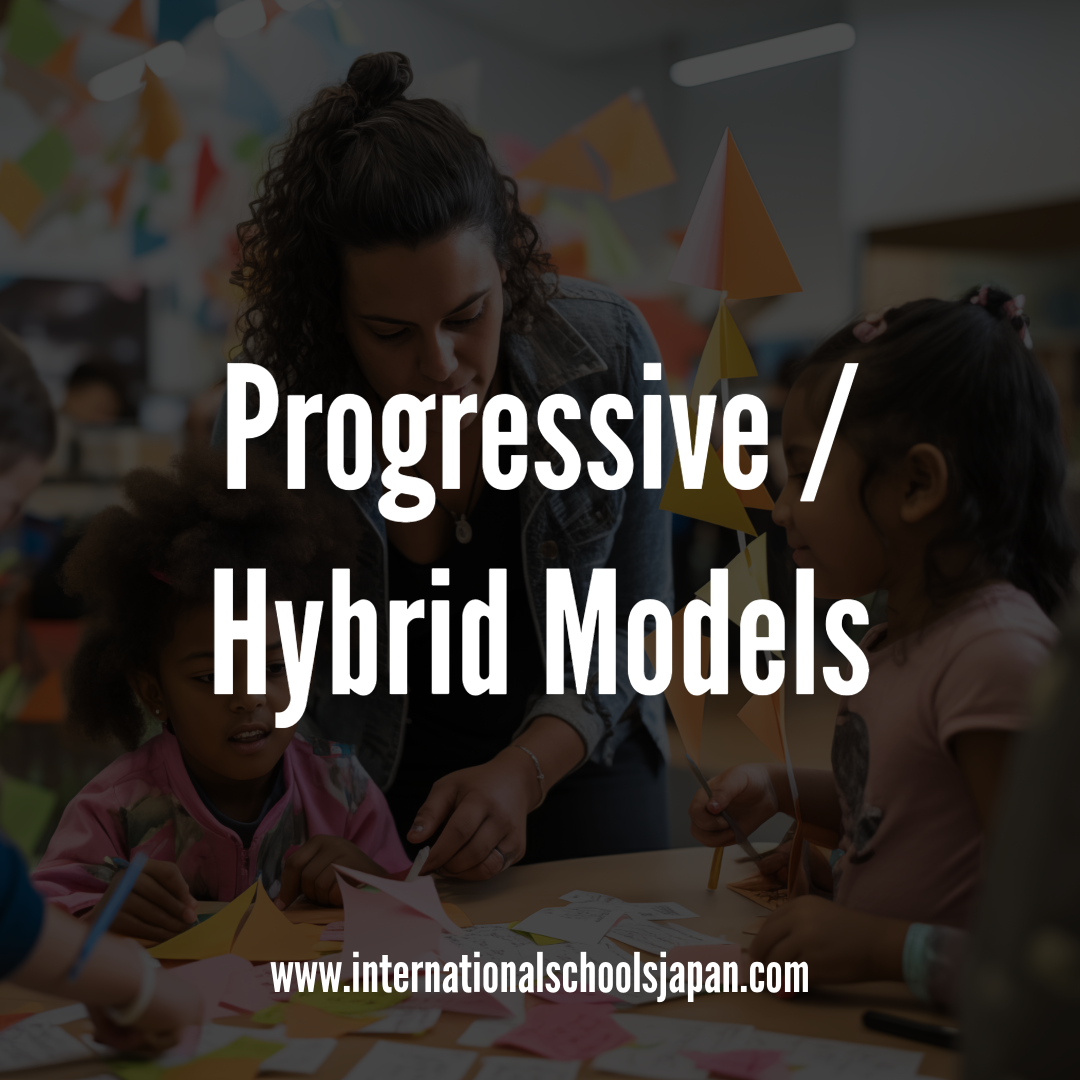
Progressive / Inquiry-Based / Hybrid Models
An education model focused on experiential learning, collaboration, and real-world problem solving rather than exams.
French, German, and Other National Systems
Curricula based on specific national education frameworks, often aligned with home-country standards and qualifications.

How to Choose the Right Fit
Choosing a school isn’t about finding the “best” option — it’s about understanding what aligns with your child, your family, and your long-term plans. International schools differ in approach, structure, and priorities, and the right fit will vary from family to family.
Learning Style
Is your child more comfortable with structured, teacher-led lessons, or do they thrive in more exploratory, student-led environments? Different curricula emphasize different approaches to learning.
Language Environment
Consider the primary language of instruction, support for non-native speakers, and how language is used in daily school life. Language exposure can play a significant role in both academic progress and social integration.
Academic Pathway
Think ahead to qualifications, exams, and where your child may study in the future. Some curricula follow clearly defined academic routes, while others offer more flexibility over time.
Practical Factors
Location, school size, age range, calendar, and daily logistics often matter more than families expect. These practical considerations can have a big impact on long-term sustainability.
Cost Considerations
Tuition and related fees can vary widely between schools and curricula. When comparing options, it’s important to understand what is included, what additional costs may apply, and how expenses may change as your child progresses through different grade levels.
Schools and programs vary. Information is provided to support understanding, not to rank or recommend.